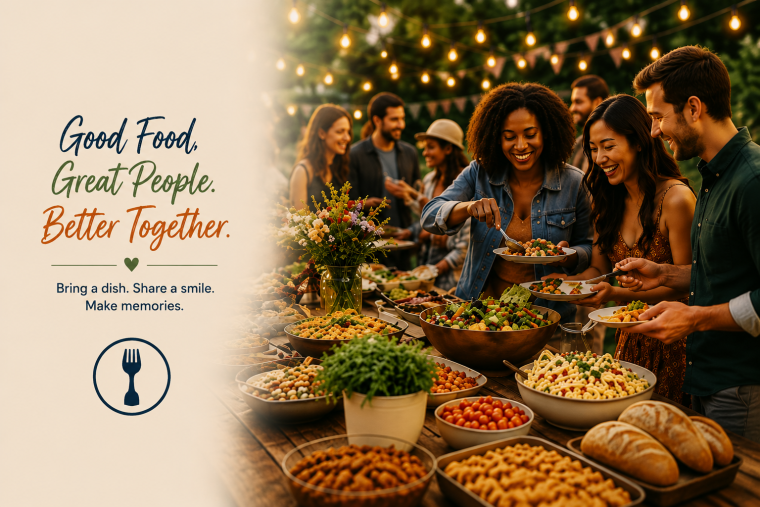
You know the moment. It's twenty minutes before people arrive, and you're looking at a counter with four pasta salads on it. Someone texts to ask what they should bring and you say "oh, whatever, we've got plenty" because you genuinely cannot remember what anyone claimed three weeks ago in a group chat that has since become a thread about someone's dog. Dinner will be fine. Dinner is always fine. But you spent the last month holding a mental spreadsheet that nobody asked you to maintain, and there is still no ice.
The cooking was never the hard part. The coordination is. And the tools people reach for are all slightly wrong for the job — a group text buries the important message under forty replies, a shared spreadsheet asks your aunt to open Google Sheets on her phone, and a printable sign-up sheet only works if everyone is standing in the same room as the printer. Each one puts the work back on the host, which is exactly the person who already has the most to do.
BringWhat is built around a smaller idea: the list should live in one place, and everyone should be able to see it. You create an event, add what's needed — a main dish, a salad, drinks, folding chairs, the ice — and share one link. Guests open it and see what's already claimed and what's still missing. When someone takes the green bean casserole, it's gone from the list, and the next person who opens the link sees six other things that actually need doing instead. No duplicates, no mental tally, no "did I already tell someone to bring bread?"
The part that matters most is what guests don't have to do. There's no account to create, no app to install, no password to reset before they can tell you they're bringing a pie. They tap the link, claim an item, and they're done. That sounds like a small thing, but it's the difference between everyone responding and half your guest list silently deciding to figure it out later. Coordination only works if the easiest path is the one you want people to take.
There's research on this, and it's more interesting than you'd expect. Robin Dunbar — the Oxford psychologist best known for the theory that we can only really maintain about 150 relationships — ran a national survey on how often people eat with other people. Those who share meals more frequently report being happier, more satisfied with their lives, more trusting of the people around them, and more connected to the place they live. They also have more friends they'd count on in a crisis. The finding that stuck with me was about direction: when he tested which way the arrow points, it ran from eating together toward closeness, not the reverse. Sitting down at the same table doesn't just reflect that you're close to someone. It's part of how you get there. (Oxford's summary, or the full paper if you want the data.)
Which is a long way of saying the ice matters more than it looks like it does. None of this is really about potlucks, either — it's the same shape any time a group has to divide up a list. A camping trip where somebody needs to own the stove, a holiday dinner across three households, a classroom party, a housewarming, a tailgate. If you've ever been the person keeping track, BringWhat is meant to take that job off your hands. It's free, it will stay free for guests, and the whole thing takes about two minutes to set up.
I've been building this one on and off for a long time, for reasons that are more personal than technical — that story is here if you want the longer version.